PM Surya Ghar: ₹78,000 subsidy window is open
Central Financial Assistance up to ₹78,000 for residential rooftop systems is currently live. We handle registration, documentation and net-metering end to end.

How Does a Solar Power Plant Work? From Sunlight to Electricity
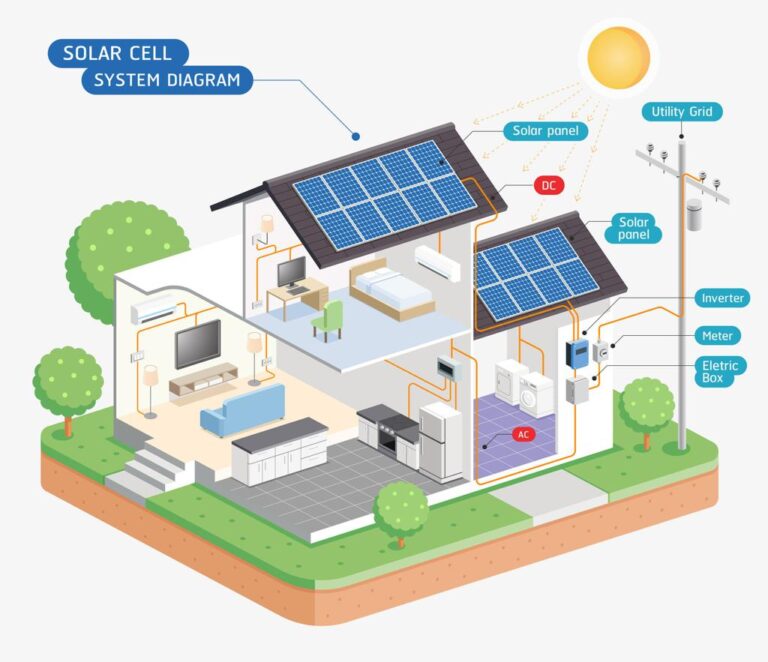
Solar panels are becoming increasingly common on residential rooftops, factories, commercial buildings and large ground-mounted projects. But how exactly does a solar power system convert sunlight into usable electricity?
Let’s understand the process.
Step 1: Solar Panels Capture Sunlight
Solar PV modules contain photovoltaic cells that convert sunlight into DC electricity.
The amount of electricity generated depends on several factors including:
- Solar radiation
- Panel technology
- System size
- Temperature
- Shading
- Orientation and installation quality
Flame Solren supplies solar modules including mono PERC and TOPCon options, with DCR and non-DCR choices depending on project requirements.
Step 2: The Inverter Converts DC into AC
The electricity generated by solar panels is generally DC electricity.
The inverter converts this DC power into AC electricity that can be used by electrical loads.
Flame Solren offers string inverters for applications ranging from homes to MW-scale plants, with systems sized and matched by its engineering team.
Step 3: Electrical Protection
A solar plant also requires appropriate electrical protection.
ACDB and DCDB panels, surge protection, fuses, breakers and other electrical components help protect the system and connected equipment.
Flame Solren states that its ACDB/DCDB panels are built according to the system SLD and tested before supply.
Step 4: Electricity Is Used
Generated solar electricity can supply the building’s electrical loads.
For grid-connected systems, surplus electricity may be exported to the grid according to applicable net-metering arrangements.
Step 5: Monitoring
Modern solar plants can be monitored to track generation and identify performance issues.
Flame Solren’s O&M offering includes daily remote generation monitoring and alerts for underperformance.
Conclusion
A solar power plant combines several components:
Solar Panels → Inverter → Protection System → Electrical Loads/Grid → Monitoring
Every component has a role to play, which is why professional system design is important for long-term performance.