PM Surya Ghar: ₹78,000 subsidy window is open
Central Financial Assistance up to ₹78,000 for residential rooftop systems is currently live. We handle registration, documentation and net-metering end to end.

Rooftop Solar for Homes: A Complete Guide for Homeowners in Gujarat
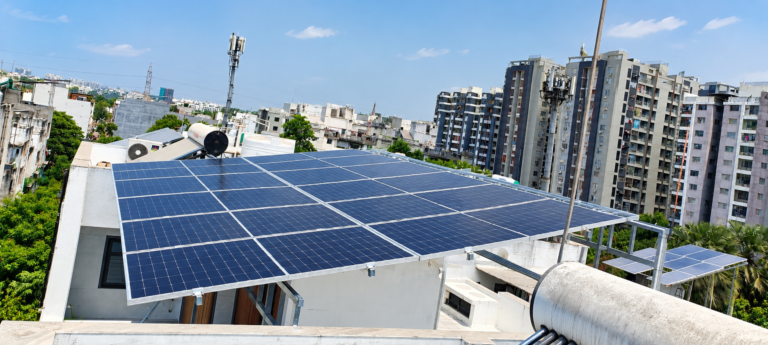
Rooftop Solar for Homes: A Complete Guide for Homeowners in Gujarat
Electricity bills have become an important part of every household’s monthly expenses. Rooftop solar offers homeowners an opportunity to generate clean electricity from an otherwise unused rooftop while reducing dependence on conventional grid power.
For homeowners in Gujarat, a properly designed rooftop solar system can be a long-term energy investment.
Why Choose Rooftop Solar?
A residential solar system can help homeowners:
- Reduce monthly electricity expenses
- Generate clean and renewable electricity
- Make better use of available rooftop space
- Reduce exposure to future electricity tariff increases
- Monitor solar generation through digital monitoring systems
- Benefit from applicable government support schemes
Flame Solren’s residential solar solutions are designed according to the customer’s actual electricity consumption, available roof area and site conditions.
How Much Solar Capacity Do You Need?
The right system size depends on factors such as:
- Monthly electricity consumption
- Electricity tariff
- Available rooftop area
- Roof orientation and shading
- Local electricity regulations
Flame Solren provides a solar calculator that estimates electricity consumption, required system capacity, area requirement, system cost and applicable subsidy based on the customer’s inputs.
Understanding Net Metering
With net metering, electricity generated by the solar system can be used by the home, while surplus generation can be exported to the grid according to applicable DISCOM regulations.
This makes a grid-connected rooftop solar system particularly useful for homes with suitable daytime and overall electricity consumption.
Government Subsidy
The Flame Solren website currently highlights PM Surya Ghar Central Financial Assistance up to ₹78,000 for eligible residential rooftop systems up to 3 kW and states that its team assists with registration, documentation and net-metering.
Why Professional Installation Matters
Solar is a long-term asset. Proper site assessment, structure design, electrical protection, panel installation, inverter selection and commissioning are important for reliable performance.
Flame Solren’s process starts with a site survey, followed by system design, supply and installation, subsidy/net-metering support and ongoing monitoring and maintenance.
Conclusion
Rooftop solar is not simply about installing panels. It is about designing an energy system that matches your home’s electricity consumption and rooftop conditions.
Want to know how much solar your home needs? Get a free site survey from Flame Solren.